The Difference Between Effort, Value, and Price
In the twenty-first century, amid the rapid rise of artificial intelligence, many everyday discussions about capitalism and economics remain trapped in an idea that seems intuitive: if someone has worked very hard to produce something, then that thing must be worth a lot. It feels like a matter of simple justice.
Certainly, this is a powerful and well-intentioned intuition. Unfortunately, it is also one of the most persistent sources of economic confusion.
For centuries, many thinkers explained the value of things in terms of the labor required to produce them. The idea appears in a partial form in Aristotle, reappears among various Scholastic thinkers, can be found in Adam Smith, and reaches its most famous formulation in Karl Marx, whose influence became so widespread that it still shapes much of the way we think about economics today.
This is what is known as the labor theory of value.
It begins with a legitimate question: why is something worth what it is worth? The traditional answer, which seems perfectly logical, is that value depends on the amount of labor invested in producing it. Thus, if a table requires ten hours of work and a chair requires five, the table should be worth roughly twice as much.
Adam Smith opened the door to this theory. David Ricardo systematized it, and Marx turned it into the foundation of his critique of capitalism. The result is that, even today, a large part of society continues to assume that labor creates value and that capitalist profits are derived from that value. It is therefore easy to understand why many people still believe that employers somehow “exploit” their workers.
And yet, despite how deeply embedded this idea is in our collective mindset, everyday experience constantly shows us that things do not work this way.
For example, I might spend an enormous number of hours building a machine that nobody needs, while a clever software engineer might quickly develop a solution to a problem that saves a company millions. Who has created more value?
Confusing economic value with human value is therefore a mistake. But confusing human value with economic value is equally mistaken.
If value depends exclusively on labor, the answer is obvious: I have.
And yet most of us intuitively recognize that the second person has created more value.
Value, therefore, does not depend on the effort invested but on the usefulness perceived by other people.
At the end of the nineteenth century, the Austrian economist Carl Menger and other marginalist thinkers arrived at a revolutionary conclusion: things are not valuable because we have worked on them. On the contrary, we work on them because we expect someone else to value them.
Value is generated neither in objects nor in the production process itself. It is generated in the mind of the potential consumer.
Consider a bottle of water. It may have a negligible price in a rainy city and an immense value in the middle of a desert. The labor required to produce it is the same; the value is not.
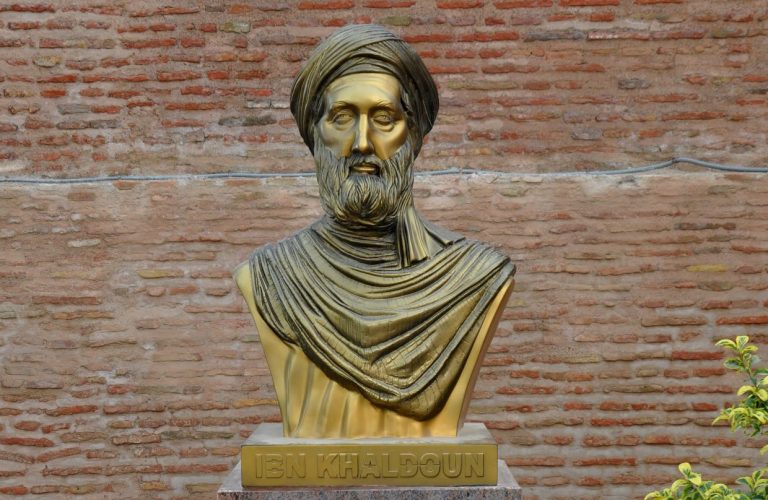
Four centuries before Menger, Ibn Khaldun had already perceived that value is a relationship between objects and people.
Retired in 1375 at the fortress of Qal’at Ibn Salama, in present-day Algeria, Ibn Khaldun observed that prices varied according to abundance and scarcity — that is, according to demand. In his Muqaddimah, a work intended to explain why civilizations rise and decline, he described how the same goods could have different values depending on cities, populations, and social circumstances.
Without yet formulating a modern theory of subjective value, Ibn Khaldun understood that labor is indispensable for producing wealth, but that markets do not reward hours of work as such. They reward what other people desire.
The subjective theory of value therefore completely reverses the direction of causality. Labor does not create value. Rather, perceived value determines which kinds of labor are worth undertaking.
However, saying that economic value is subjective does not mean that everything can be reduced to the market.
Friendship, love, dignity, beauty, loyalty, and truth also have value — immense value. But they are not goods that we buy and sell.
Markets can be extraordinary mechanisms through which society collectively and spontaneously “decides” which things have economic value and which do not. Yet they are not the only source of value in a society. Families, friendships, traditions, religious and cultural communities, and civic institutions also create value, even if that value never appears in a price.
Confusing economic value with human value is therefore a mistake. But confusing human value with economic value is equally mistaken.
Ultimately, the subjective theory of value does not attempt to explain the meaning of life. It merely seeks to answer a more modest question: why do some things have one price while others have a different price in the marketplace?
The Persistence of an Error
And yet, even in the twenty-first century, much of society continues to think in terms of the labor theory of value.
When we say that a salary is “unfair” because someone “works harder,” we are often using this framework.
When we argue that an artist deserves a certain income because they have devoted years to their craft, we are doing the same.
When we imagine that business profits are simply extracted from the labor of others, we remain within the same conceptual framework.
But markets — that is, the millions of people who make decisions every day — do not primarily reward effort. They reward the ability to satisfy human needs.
We may like this reality or dislike it. We may consider it just or unjust. But ignoring it will not make our problems disappear, as current housing debates clearly illustrate. On the contrary, it often prevents us from understanding those problems and, consequently, from solving them.
Perhaps, instead of nurturing apocalyptic visions of the market economy, we would do well to return to Ibn Khaldun and remember a simple idea: the value of things is subjective. It depends on the needs, desires, and circumstances of each individual.
And, following in his footsteps, we might try to understand the world as it actually works. From there, paraphrasing Jaume Balmes, we can pursue the necessary evolutions that spare us all from new and tragic revolutions.
. . . .


Deixa un comentari